Warehouse Storage Guides
Selective Pallet Racking System: Design, Benefits and Warehouse Applications
How selective pallet racking works, how it differs from double-deep and drive-in systems, what it costs to get right, and what to check before installation in India.
On this page46 sections
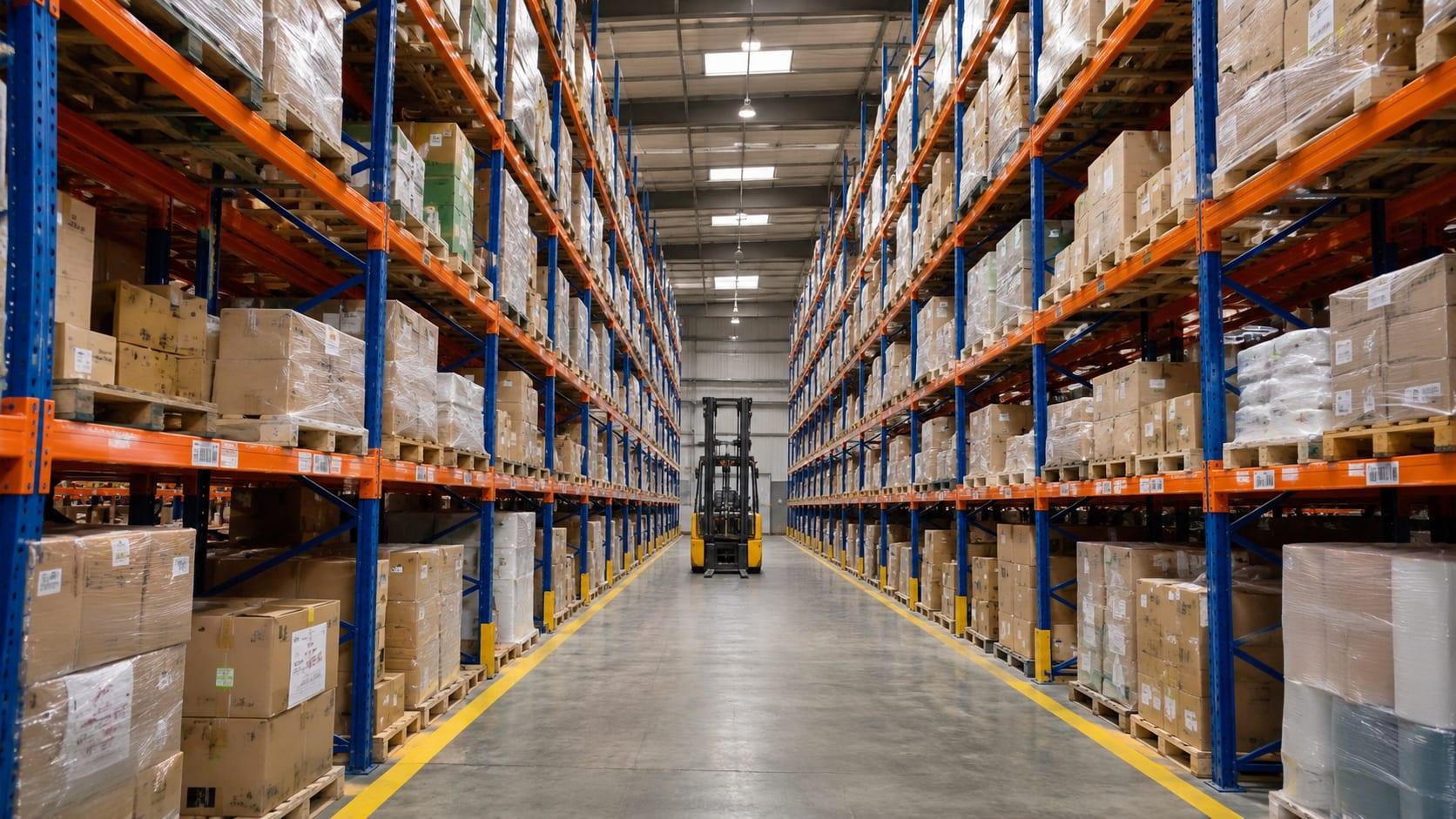
Warehouses need more than additional storage space. They need a system that stores goods safely, lets a team find and reach a specific pallet quickly, and copes with several product types without extra handling. A selective pallet racking system is the most widely used way to do that: it stores palletised goods on multiple levels and lets an operator reach any pallet directly, without moving the pallets around it.
That makes it a practical choice for warehouses, manufacturing plants, distribution centres, logistics companies and any business managing many different products. Whether you are fitting out a new warehouse or improving an existing one, understanding how selective pallet racking is built and what it can and cannot do is what separates a layout that works from one that has to be rebuilt.
This guide explains the structure, the working principle, the configurations, the applications, the factors that drive its cost and the checks to complete before installation. It is written for warehouse owners, factory managers, procurement teams and 3PL operators, and it flags clearly where a decision needs a qualified engineer rather than an opinion.
What Is a Selective Pallet Racking System?
A selective pallet racking system is a steel storage structure that holds palletised goods on horizontal load beams between upright frames, with every pallet position reachable directly from an operating aisle. Pallets are loaded and unloaded with a forklift, reach truck or similar material handling equipment.
The word selective is the important part. In a high-density system, some pallets sit behind others and have to be moved before they can be reached. In a selective rack, each pallet position has its own place in the aisle, so the operator drives to it and lifts the pallet straight out.
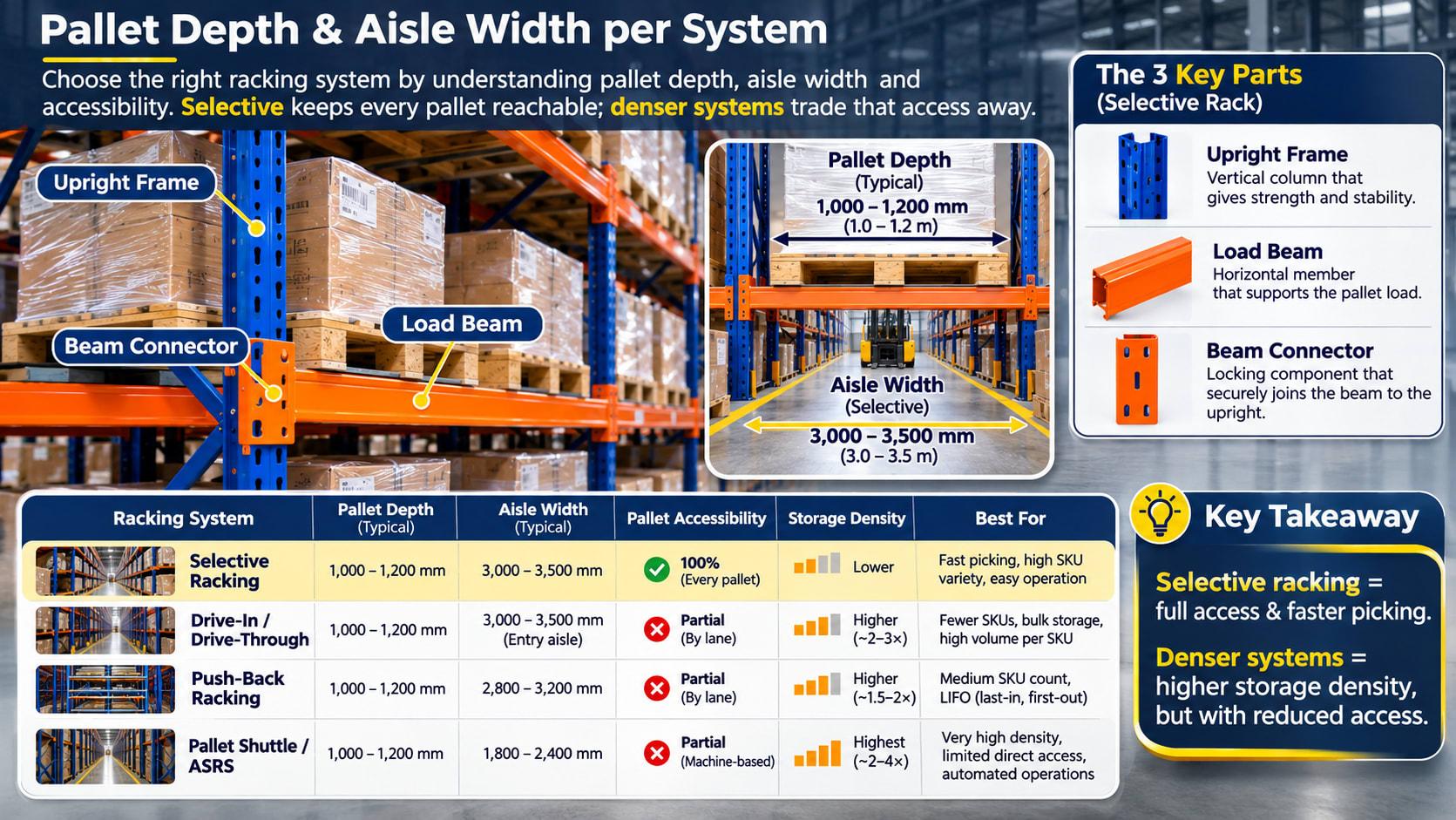
The trade-off is floor space. Direct access needs aisles wide enough for the equipment that works in them. Where density matters more than immediate access, the alternatives are double-deep, drive-in, push-back or very narrow aisle (VNA) racking — covered in detail further down.
What Are the Main Components of Selective Pallet Racking?
A selective pallet racking system is built from five component groups, and each one contributes to the stability, load capacity and day-to-day performance of the installation.
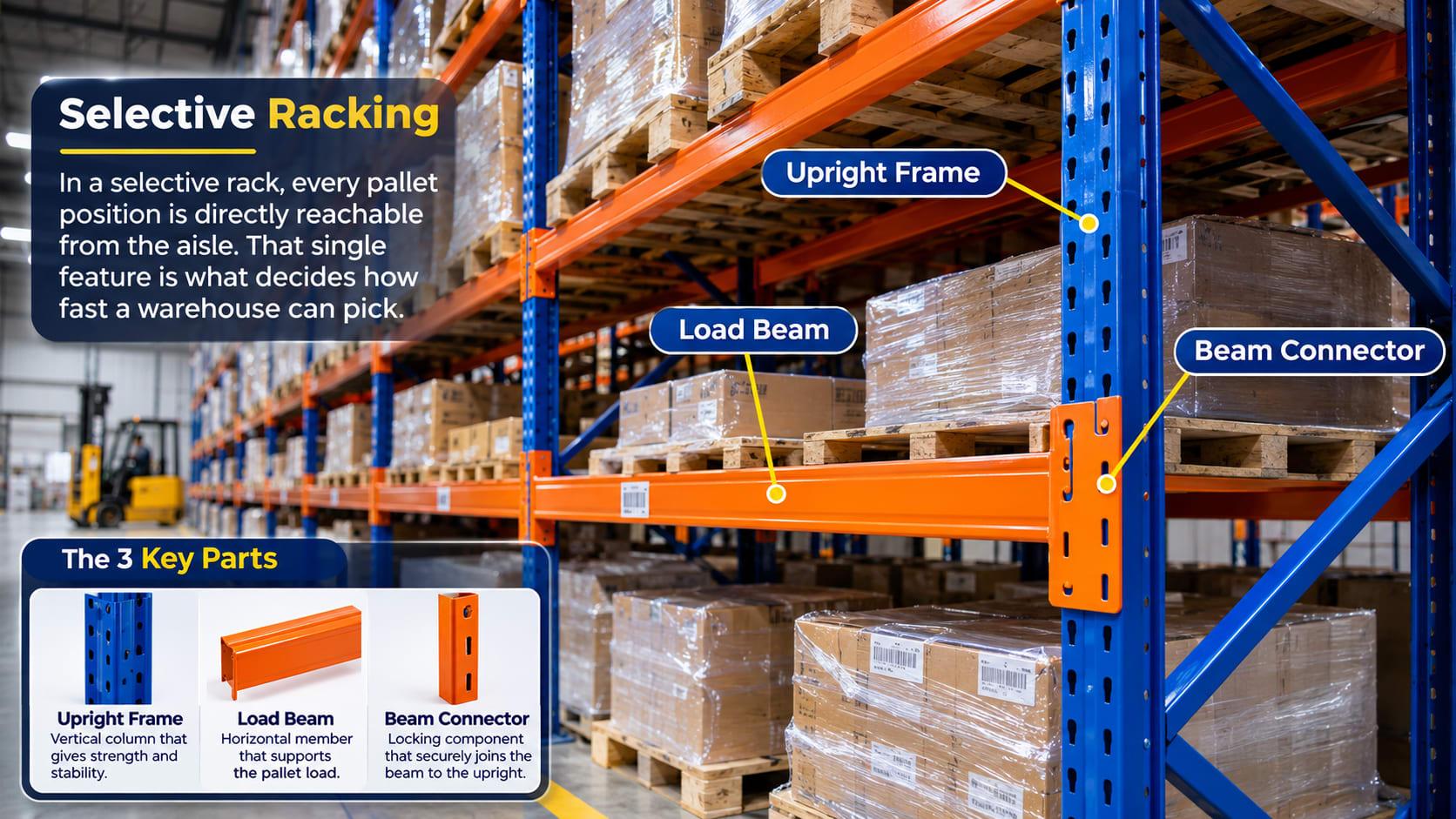
Every part of a selective rack carries a job. The upright frame takes the vertical load and the lateral forces from the aisle; the beam takes the pallet load; the connector transfers that load from the beam into the frame; the base plate and anchor take everything into the floor; and the accessories protect the structure from the equipment working next to it.
Upright Frames
Upright frames are the vertical structural components that carry the beams and the stored loads. Each frame is built from vertical columns, horizontal bracing and diagonal bracing, and its section size and height are set by the rack height, the loading conditions and the design of the rack itself.
Horizontal Load Beams
Load beams connect two upright frames and support the pallets at each storage level. Beam selection depends on the pallet dimensions in use, the weight of a loaded pallet, how many pallets sit across a bay and the capacity the design has to carry.
Base Plates and Floor Anchors
Base plates connect the upright frames to the warehouse floor, and suitable floor anchors hold the structure in position. Floor condition, concrete strength and the anchoring detail are checked during installation planning, because the floor is carrying the whole load.
Pallet Support Bars
Pallet support bars add support beneath the pallets where the design, the pallet type or the storage arrangement calls for it — for example where a pallet overhangs the beam or where a floor-level position needs a continuous bearing surface.
Safety Accessories
Depending on the layout and the operating conditions, a selective installation may also carry the following, and the right set depends on the actual application and risk assessment:
- Upright protectors and column guards at aisle ends
- Row spacers between back-to-back frames
- Pallet support bars for overhang or floor-level storage
- Back mesh or safety panels for long or irregular goods
- Rack end barriers and aisle protection
- Load capacity signage on each bay
How Does a Selective Pallet Racking System Work?
A selective system works by arranging palletised goods in organised rows with an operating aisle between each pair of rows. Each bay holds several storage levels, and each level holds a pallet position at a known location in the aisle.
The operating cycle is straightforward:
- Receiving — goods arrive on suitable pallets and are checked in at the goods-in area.
- Storage — a forklift or reach truck lifts the pallet and places it on the assigned beam level.
- Inventory management — each pallet position is identified through a warehouse labelling or inventory management system, so its location is known without searching.
- Picking — the operator drives to the position and lifts the required pallet straight out of the rack.
- Dispatch — selected goods are moved to the staging or marshalling area for despatch.
Because every position stays individually accessible, a business can hold different products, sizes and batches in the same aisle and still keep stock control simple. For a fuller comparison of access models, see how to choose the right pallet racking system.
Which Selective Pallet Racking Configurations Are Available?
Selective pallet racking can be planned in different configurations depending on the available floor space, the material handling equipment in use and how much direct access the operation needs. The three most common are single-deep, double-deep and very narrow aisle.
Single-Deep Pallet Racking
Single-deep racking is the conventional arrangement: one pallet is stored deep at each position and every pallet is accessed directly from the aisle. It is the configuration most commonly meant by selective racking.
- Direct access to every pallet position
- Simple stock identification and location control
- Suitable for many different SKUs
- Works with the forklifts and reach trucks most warehouses already own
- Easy stock rotation and order picking
It is best suited to warehouses with multiple product types, frequent picking and a genuine need for high pallet selectivity.
Double-Deep Pallet Racking
Double-deep racking stores two pallets one behind the other, which increases density by reducing the number of operating aisles or by adding positions per row. The rear pallet is not reachable while the front one is in place, and specialised equipment such as a double-deep reach truck is generally required.
- Higher storage density than a single-deep layout
- Better use of the available floor area
- Useful where large quantities of the same product are held
It suits facilities where density matters more than immediate access to every individual pallet.
Very Narrow Aisle (VNA) Pallet Racking
Very narrow aisle racking increases density by narrowing the operating aisle. It normally needs specialised handling equipment — turret trucks or suitable articulated trucks — and a building with the height and floor quality to support it.
- Better use of the available floor space
- Increased pallet storage potential in the same footprint
- Suitable where greater vertical storage is required
It suits warehouses with suitable building height, floor conditions and specialised material handling equipment.
What Are the Benefits of Selective Pallet Racking Systems?
Direct Access to Every Pallet
The main advantage is accessibility. An operator retrieves the required pallet without shifting anything else, which reduces unnecessary handling and shortens the time between a request and a dispatch.
Better Inventory Management
Warehouses usually hold different products, sizes and batches at the same time. Individual storage positions make it easier to organise inventory, identify a product and track stock movement than an open, unstacked floor does.
Simpler Warehouse Operations
Direct pallet access simplifies loading, unloading, replenishment and order picking, which matters most where orders are frequent and stock moves daily.
Adjustable Storage Levels
Beam levels can generally be repositioned within the positions the design allows, so a business can accommodate different pallet heights and changing product dimensions without replacing the structure. Any reconfiguration is checked against the approved rack design and its load capacity first.
A Flexible Storage Layout
Selective racking can be laid out around different warehouse dimensions, pallet sizes, storage heights and handling equipment, and it can be extended or reconfigured when the business changes — subject to structural and layout checks.
Integration with Material Handling Equipment
The system works with the equipment a warehouse already runs:
- Counterbalance forklifts
- Reach trucks
- Electric stackers
- Other compatible pallet handling equipment
The equipment type decides the aisle width, the turning space, the lifting height and the rest of the layout, so it is settled before the rack drawing is finalised rather than after.
A Straightforward System to Start With
Compared with more specialised automated or high-density systems, conventional selective racking has a simple structure and a well-understood installation process. For many warehouses, that makes it a practical starting point while the operation grows.
Where Are Selective Pallet Racking Systems Used?
Selective pallet racking suits any operation that stores palletised goods and needs regular access to them. It is used across:
- Warehousing and distribution centres — storing incoming goods, finished products, bulk inventory and dispatch-ready pallets.
- Manufacturing plants — organising raw materials, components, work-in-progress and finished goods.
- E-commerce and retail — warehouses managing many product categories, different SKUs and frequent customer orders.
- FMCG businesses — organising packaged goods and managing regular inventory movement.
- Automotive — organised storage for spare parts, components and palletised automotive materials.
- Pharmaceutical and healthcare warehousing — organised storage of suitable palletised products in ambient or temperature-controlled environments, where the rack design and storage conditions are appropriate.
- Third-party logistics — helping providers manage stock belonging to different clients inside shared facilities.
If a specific sector is the deciding factor for your project, our industry pages set out the storage challenges each one works with — manufacturing, logistics and pharmaceutical go into more detail.
Selective Pallet Racking vs Other Warehouse Storage Systems
Not every warehouse needs the same system. The right choice depends on the number of SKUs, the quantity of each, how often stock moves and how much floor space is available.
| Storage System | Main Advantage | Suitable Application |
|---|---|---|
| Selective Pallet Racking | Direct access to each pallet | Many SKUs and frequent picking |
| Double-Deep Racking | Higher pallet density | Larger quantities of similar products |
| Drive-In Racking | High-density block storage | Fewer SKUs with larger quantities |
| Push-Back Racking | Multiple pallets stored in depth | Batch-based inventory |
| Mobile Racking | Reduced fixed aisle space | Space-constrained storage |
| Multi-Tier Racking | Multiple manual picking levels | Cartons and smaller goods |
The best solution is not always the one that stores the most pallets. It is the one that balances storage capacity, accessibility, handling efficiency and operating cost for the way your business actually works.
Rack & Stack supplies both conventional selective pallet racking and higher-density systems, including multi-tier racking for cartons and smaller goods and cantilever racking for long or irregular materials.
What Should You Check Before Installing Selective Pallet Racking?
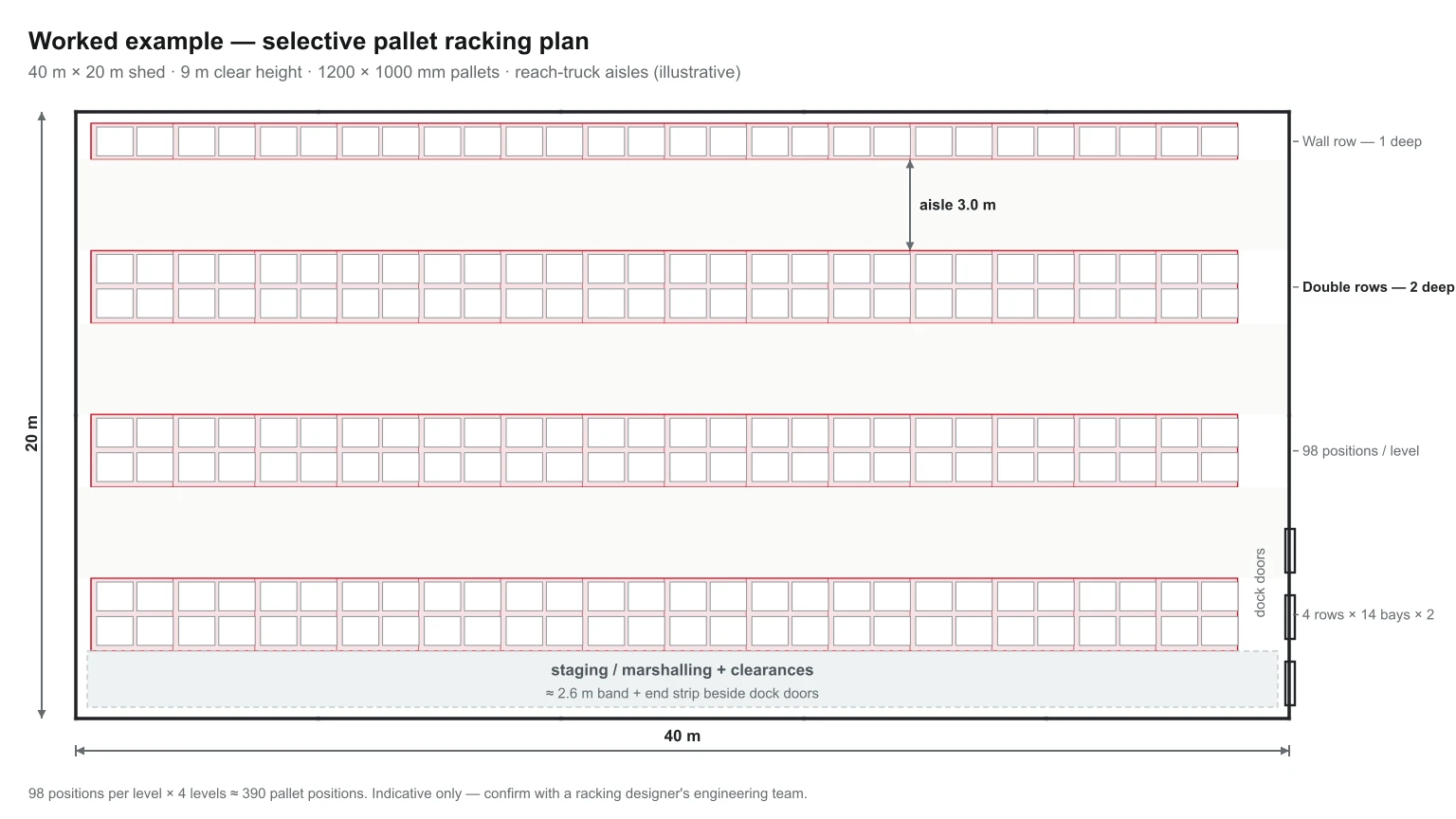
Before choosing a pallet racking manufacturer or approving a layout, six things have to be confirmed. Each of them changes the design, and each of them is cheap to check and expensive to ignore.
Pallet Dimensions
Measure the length, width and overall loaded height of the pallets in use, including any overhang. Pallet dimensions determine the beam length, the bay configuration and the clearance needed on each level.
Pallet Weight and Load Capacity
Establish the maximum weight of a loaded pallet. The design has to consider both the load carried by each beam level and the total load carried by each bay, and the two are not the same number. A rack should never be selected on its external dimensions or appearance alone.
Available Building Height
Check the clear height, the roof structure, sprinklers, lighting and any other overhead obstruction. The usable rack height also has to match the lifting height of the material handling equipment that will work in the aisle.
Forklift and Aisle Width
Aisle width is part of the racking design, not a leftover space. It depends on the forklift or reach truck in use, its turning and operating requirements, the pallet dimensions and the working clearance needed. It should be confirmed with the equipment supplier and the rack designer together rather than assumed from a standard figure.
Floor Strength and Condition
The floor has to carry the rack loads and take the anchors. Floor levelness, concrete condition, load distribution and the anchor specification are checked before installation starts.
Future Storage Requirements
Think about how the business will grow: more pallets, different product sizes, extra beam levels, a second site. A layout that allows for these changes avoids modifications that are expensive to retrofit.
Selective Pallet Racking Safety and Maintenance
A properly designed and installed pallet racking system needs regular inspection and responsible operation. The practices that matter most are short:
- Display the approved safe working load clearly on each bay.
- Never exceed the rated beam-level or bay capacity.
- Use pallets that suit the rack design.
- Place pallets correctly on the supporting beams.
- Inspect upright frames, beams, connectors and anchors regularly.
- Check for damage caused by forklift impact.
- Replace damaged components with approved, compatible parts.
- Avoid unauthorised changes to beam levels or structural components.
- Keep aisles clear for safe forklift movement.
If structural damage is found, restrict access to the affected area and have it assessed by a competent racking professional before the rack is used again. Design, installation and inspection should follow the applicable safety requirements and relevant engineering standards for the site.
What Affects the Cost of Selective Pallet Racking?
Selective pallet racking is quoted per project rather than from a fixed price list, because the price of an installation depends on the building, the goods and the equipment. We do not publish a rate card that would not match your warehouse. The factors that move the number are these:
- The storage capacity required — the number of pallet positions and the levels needed to reach them.
- The load to be carried — heavier pallets need heavier beams and frames, and deeper or wider frames cost more.
- The building — clear height, floor condition and anchoring requirements all affect how the rack is founded.
- The configuration — single-deep, double-deep and VNA layouts differ in material and in the equipment needed to work them.
- The material handling equipment — the truck in use sets the aisle width, which sets how many rows fit.
- The accessories — column guards, row spacers, mesh decking and load signage are quoted against the risk assessment.
- The installation scope — delivery, erection, anchoring, labelling and any dismantling or relocation work.
A site survey and a bay layout let us price the work accurately, because the survey is what turns the list above into a specific number. If you want a comparison before that stage, request a quote with your dimensions and pallet details and we will tell you what we can and cannot confirm yet.
How Do You Choose a Selective Pallet Racking Manufacturer in India?
Warehouse racking has to match your real storage and handling requirements, so the choice of supplier matters more than the choice of a catalogue. Before finalising a manufacturer, check six things:
- Design and engineering — can they plan the rack dimensions and load requirements around your warehouse rather than around a standard drawing?
- Customisation — can the system be designed for your pallet sizes, your available height and your required number of levels?
- Manufacturing quality — do they have production and quality control processes you can actually see?
- Installation experience — can the team handle on-site assembly, alignment, anchoring and handover?
- Safety support — do they provide load information, suitable accessories and guidance for safe operation?
- After-sales support — can they assist with inspection, maintenance, repairs and future modifications?
A supplier who understands your warehouse operations before recommending a configuration will usually propose a layout you can live with for years. One who only quotes a rack and an aisle width will leave you with whichever system was easiest for them to build.
Selective Pallet Racking Solutions by Rack & Stack Storage Systems
At Rack & Stack Storage Systems Pvt. Ltd., we plan industrial storage around warehouse space, load requirements and material handling operations. Our conventional pallet racking systems are built for businesses that need organised pallet storage, direct pallet accessibility and layouts that can change as the operation grows.
We support storage projects from survey through to handover:
- Warehouse storage planning and layout consultation
- Customised pallet racking design
- Industrial rack manufacturing
- Supply and delivery
- Professional installation and erection
- Racking dismantling and relocation
- Rack maintenance and repair
- Warehouse storage reconfiguration
Before a configuration is finalised, our team looks at pallet dimensions, load requirements, available building height, aisle widths and the forklift specifications in use. We support industrial storage requirements across India, including Mumbai, Navi Mumbai, Thane, Vasai-Virar, Pune, Ahmedabad, Bengaluru, Chennai, Hyderabad and Delhi NCR, subject to project and service availability.
Looking for a selective pallet racking manufacturer or supplier in India? The Conventional Pallet Racking System page explains the product and its applications, and Heavy Duty Pallet Racking covers the heavier-duty variant.
Related systems
 View Product
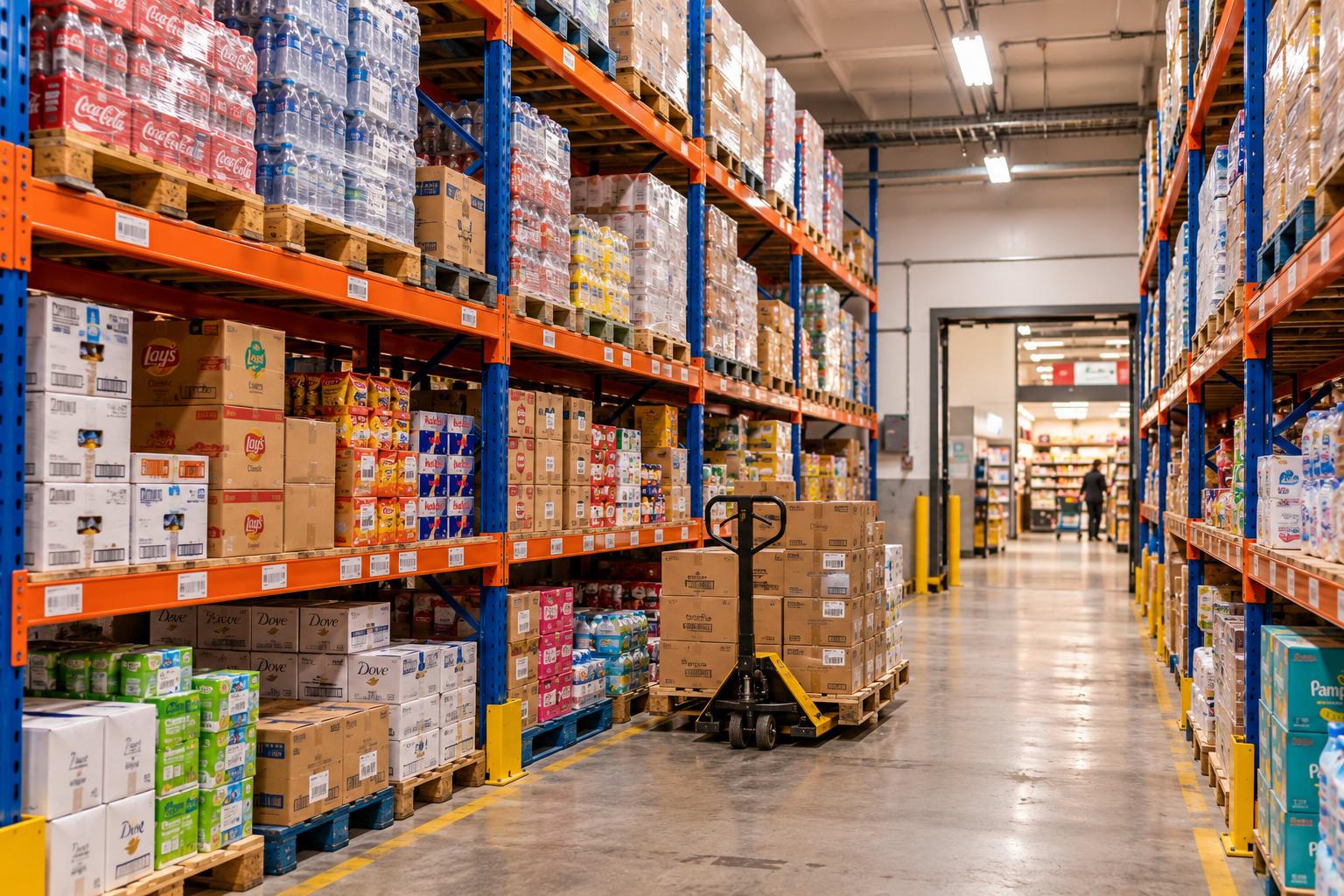
Conventional pallet racking system for selective pallet storage, allowing direct access to every pallet and efficient use of warehouse space with standard material-handling equipment.
System typeSelective conventional pallet racking
ApplicationsWarehousing and distribution centres
 View Product
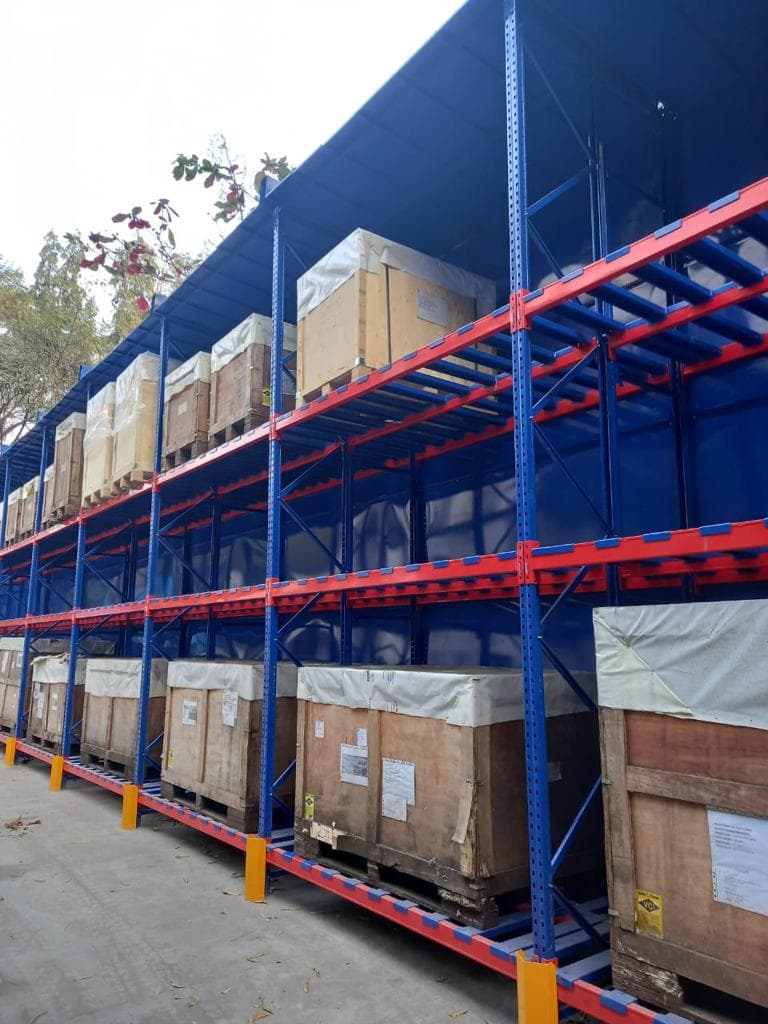
Engineered for high-load industrial warehousing, our heavy-duty pallet racks provide structural stability for unitized pallet loads. Constructed with high-strength upright frames, braced channels, and adjustable box or step beams, these systems integrate seamlessly with standard timber, plastic, and steel pallets.
Structure TypeHeavy-Duty Adjustable Industrial Pallet Racking System (Single-Deep, Double-Deep, or High-Bay configurations)
ApplicationsWarehouses and 3PL distribution centres
 View Product
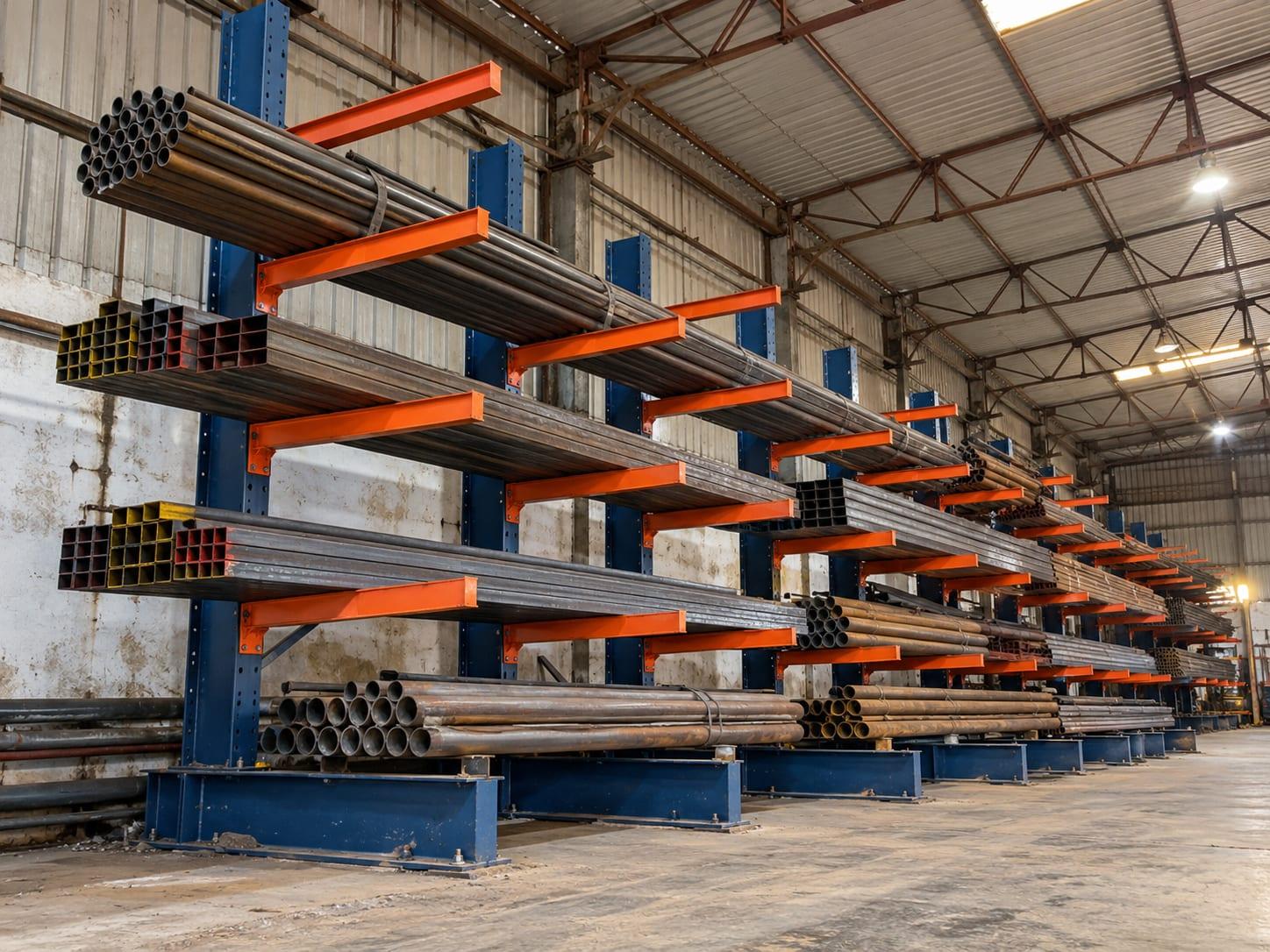
Cantilever racking system for safe, organised storage of long, bulky and irregular items like pipes, sections, panels and timber, with open front access.
System typeCantilever racking (single-sided or double-sided)
ApplicationsSteel and metal service centres
Frequently Asked Questions About Selective Pallet Racking
What is a selective pallet racking system?
A selective pallet racking system is a warehouse storage solution that gives direct access to every pallet position. It uses steel upright frames and horizontal load beams to create multiple storage levels for palletised goods, with an aisle that lets a forklift or reach truck reach any pallet without moving another one.
What is the main advantage of selective pallet racking?
Direct pallet accessibility. An operator retrieves the required pallet without moving other pallets, which makes it suitable for warehouses with many SKUs and frequent stock movement. The trade-off is floor space, because direct access needs a working aisle in front of every position.
Is selective pallet racking suitable for small warehouses?
Yes. It can be designed for small, medium and large warehouses. The final layout depends on the available floor space, the building height, the number of pallets to be stored and the material handling equipment in use — a small warehouse with a low ceiling and a hand pallet truck is a very different design from a full-height operation.
What equipment is used with selective pallet racking?
Commonly counterbalance forklifts, reach trucks and electric stackers. The right equipment depends on the rack height, the aisle width, the pallet weight and the warehouse layout, and it is decided before the rack drawing is issued because it sets the aisle dimensions.
Can selective pallet racking be customised?
Yes. Rack height, beam length, the number of levels, the bay configuration and the accessories are all planned around the warehouse dimensions, the pallet specifications and the load requirements. Where a site is unusual, the layout is adjusted to it rather than the other way round.
What is the difference between single-deep and double-deep pallet racking?
Single-deep racking stores one pallet deep and gives direct access to every pallet. Double-deep racking stores two pallets deep, which increases density, but the rear pallet can only be reached once the front position is cleared — and a double-deep reach truck is normally needed to work it.
How is the load capacity of pallet racking calculated?
Load capacity depends on the beam specification, the upright frames, the rack configuration, the pallet weight, how the load is distributed and the structural design. Both the beam-level capacity and the total bay capacity have to be considered, and both are stated for the specific design rather than as a general figure.
How much aisle space is required for selective pallet racking?
There is no single aisle width that suits every warehouse. It depends on the forklift model, its turning requirements, the pallet dimensions, the lifting method and the operating clearance needed. It is confirmed with the equipment supplier and the rack designer rather than taken from a standard assumption.
Is selective pallet racking suitable for FIFO inventory?
Selective racking can support FIFO operation when pallet positions are managed and stock is loaded and retrieved in the correct sequence. It does not enforce FIFO by itself — that comes from the location discipline and the picking routine.
Can selective pallet racking be installed in an existing warehouse?
It can be installed in an existing facility once the floor condition, the available height, the building restrictions, the forklift requirements and the storage layout have been checked. In an occupied building the erection sequence is planned around the operation, which is one of the details that separates an experienced installer from a quick one.
What information is needed to get a pallet racking quotation?
Typically the warehouse length and width, the available building height, the pallet dimensions, the maximum loaded pallet weight, the approximate number of pallets, the forklift or reach truck details, and how the space will be used for storage and picking.
A site survey or a layout drawing helps a supplier prepare a more accurate proposal. Send what you have through our request a quote form and we will tell you what else is needed.
Does Rack & Stack provide selective pallet racking installation across India?
Rack & Stack Storage Systems provides pallet racking supply and installation support across India. Project availability and execution details are confirmed for each location and requirement, because installation is planned around the site and the schedule rather than offered as a blanket service.
Products in this guide
Systems worth comparing
 View Product
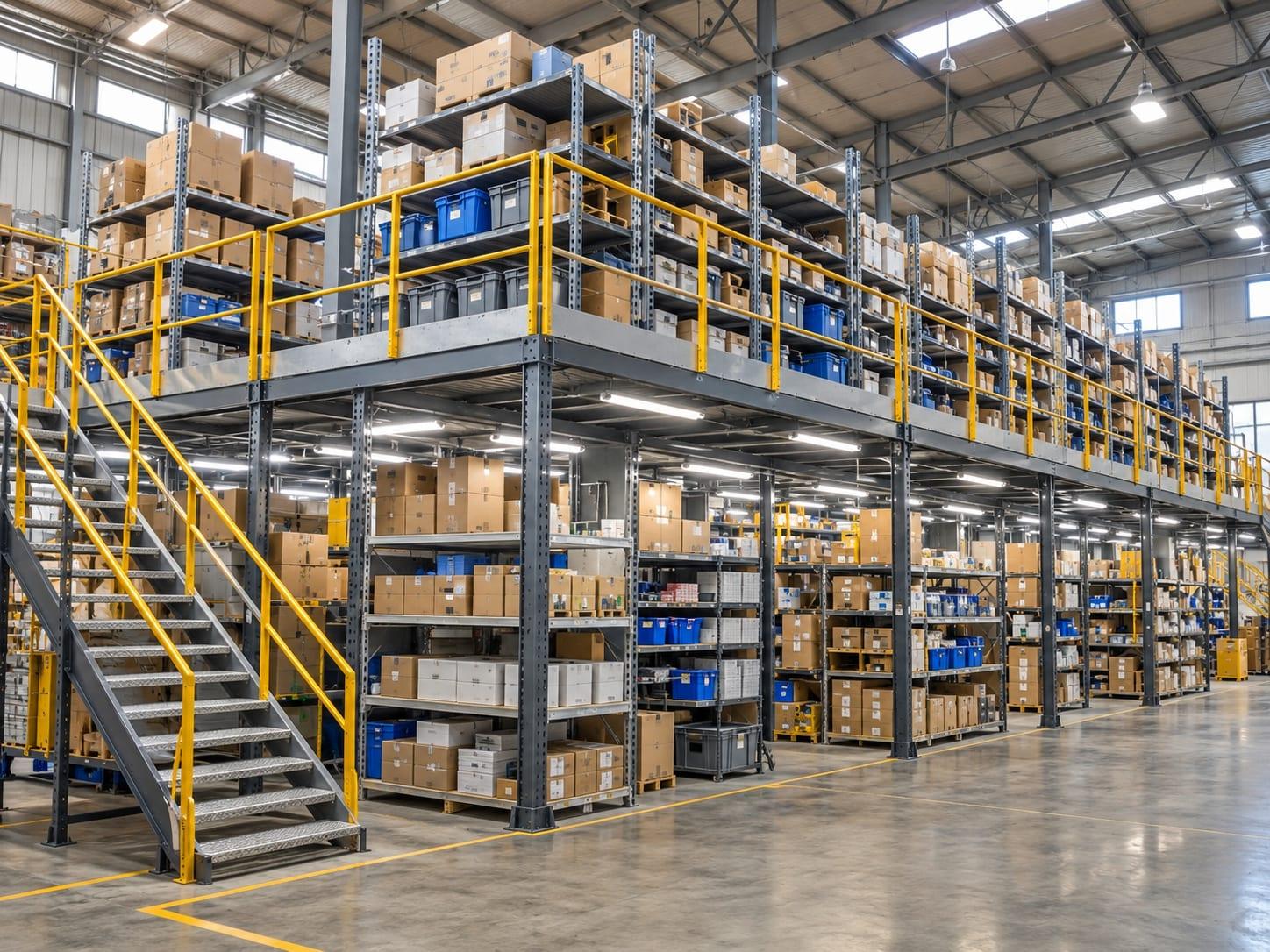
Multiply your vertical picking space without expanding your building footprint. Our multi-tier rack systems utilize rack-supported walkways, staircases, and safety handrails to create multiple manual picking levels within high-ceiling warehouses.
System typeMulti tier racking with walkways
ApplicationsE-commerce and online retail fulfilment centres

Start a Conversation
Planning a storage project?
Share your space, loads and handling equipment. We will help you work out which system fits before anything is quoted.