
A business that has moved premises
The new unit has a different shape, and the racking that fitted the old one may not fit the new one without adjustment.
Dismantling and relocation of industrial racking: surveyed, dismantled safely, repaired where needed and re-erected in the new location.
Moving a warehouse does not have to start from nothing. Existing racking can be surveyed, dismantled, repaired where it is damaged and re-erected in the new building.
Or call the works directly+91 97692 67792

Systems this work specifies
Heavy Duty Pallet RackingConventional Pallet Racking SystemHeavy Duty Long Span RacksRack dismantling and relocation is the removal of an installed racking system from one site and its re-erection at another. It suits a business that has moved, extended or downsized, and that wants to keep the storage capacity it has already paid for rather than buying new.
The work has four parts, and the first is the one most projects underestimate. A pre-relocation survey records the system as it stands: which rows are complete, which components are damaged or missing, how it is anchored and how it was built. That survey decides whether the system can be re-erected as it is, whether components need replacing, and whether it is worth moving at all. Then the dismantling is done in a controlled sequence, the components are checked and repaired as they come down, and the system is rebuilt at the new site against a fresh layout.
We carry out dismantling and relocation projects across Mumbai, Vasai-Virar, Bhiwandi, Thane, Navi Mumbai, Palghar and the wider Mumbai Metropolitan Region, and for businesses moving elsewhere in Maharashtra and across India.
The new unit has a different shape, and the racking that fitted the old one may not fit the new one without adjustment.
Racking is shifted to the new space so the two areas work as one operation rather than as isolated stores.
Systems from several smaller units are brought together, and duplication is removed from the combined layout.
The landlord needs the building clear, and the business needs its capacity back somewhere else.
The racking is in good condition but is the wrong type for the new products or the new operation.
The survey comes before the commitment, so the decision to move is made on the real condition of the system.
Replacement parts are manufactured to the original specification, so the re-erected system is consistent.
The system is taken down row by row in an agreed order, and the site is not left with a partially standing structure.
The system is re-erected against a layout drawn for the new building and the new operation, not simply copied.
Anchoring, plumbness, beam level and load signage are checked exactly as they would be on a new build.
Survey, dismantling, repair and re-erection are handled by the same company, with one point of responsibility.
Tell us about your space, your products and how you work today. If drawings exist, send those; if they do not, the site survey comes first and the plan follows it.
We inspect the installed system and record its condition, its completeness and how it was built.
You receive what can be reused, what will need replacement, what the move costs and what the new layout will be.
The system is taken down in a planned sequence, with components checked as they come off the structure.
Damaged or missing components are replaced, and the surviving parts are prepared for transport and re-erection.
The system is rebuilt against the new layout, anchored and checked in the same way as a new installation.
The rebuilt system is handed over with as-installed drawings and updated load information.

Engineered for high-load industrial warehousing, our heavy-duty pallet racks provide structural stability for unitized pallet loads. Constructed with high-strength upright frames, braced channels, and adjustable box or step beams, these systems integrate seamlessly with standard timber, plastic, and steel pallets.
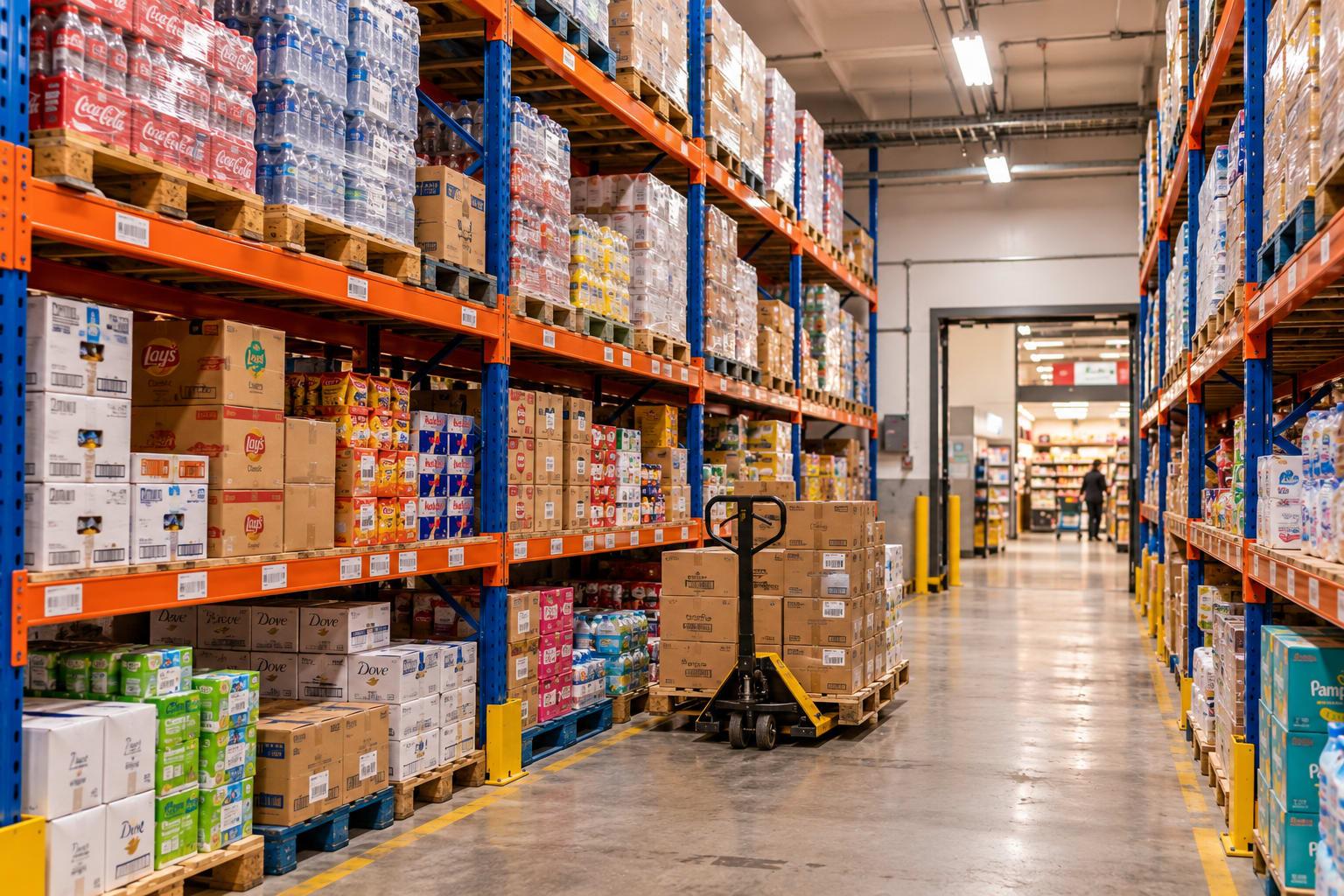
Conventional pallet racking system for selective pallet storage, allowing direct access to every pallet and efficient use of warehouse space with standard material-handling equipment.

Bridging the gap between light-duty slotted angle racks and heavy-duty pallet racking, long span shelving offers wide, unobstructed shelf bays for manually loaded bulky cartons, totes, and medium-weight containers.

Medium duty shelving racks for organised storage of cartons, spares and consumables, offering higher strength than light office shelving for industrial and commercial use.
Usually yes. A pre-relocation survey records the condition and completeness of the system, and from that we can say which components are reusable, which need replacing and what the move involves. Very heavy or very tall systems, or systems that were not anchored as installed, need individual assessment.
Share any dimensions you have, item or pallet sizes, maximum loads, quantities, how often you access them, your handling equipment and any building limits. A site survey can help fill the gaps.
Often, particularly where the system is in good condition and the new building is a similar shape. It is not automatically cheaper: damaged components, a changed layout or a longer move can close the gap. That is exactly what the pre-relocation survey is for, so the comparison can be made on real figures.
Yes. We review your columns, clear height, doors, services, movement paths and current operations before proposing a layout.
It depends on the size of the system, the access at both sites and whether the old building has to be handed back on a fixed date. Dismantling is usually faster than a new installation because the components are already cut and matched.
Capacity depends on item size, declared loads, system type, aisle space, handling equipment and the usable building area. We calculate it from your specific inputs.
Yes. Installation is included as part of the agreed project scope. We check site readiness before scheduling.
Yes. The work is planned in phases, area by area, so the operation continues in the parts of the floor that are not being worked on at the time.
Damaged components are identified as they are removed, and the ones that are not reusable are replaced with parts manufactured to the original specification. You are told what has been replaced as part of the handover.
We move racking within India, including across Maharashtra. For international moves, the shipment, customs and re-anchoring need to be planned separately, and we will tell you what we can and cannot cover before you commit.
Yes. We carry out dismantling and relocation projects across Mumbai, Bhiwandi, Thane, Vasai-Virar, Navi Mumbai, Palghar and the wider Mumbai Metropolitan Region, and for businesses relocating elsewhere in Maharashtra and across India.
It will carry a load rating confirmed for the new installation, based on the components actually used and the anchoring in the new building. Where the original design cannot be recovered, the rating is recalculated rather than assumed to carry over.