
Good racking used badly
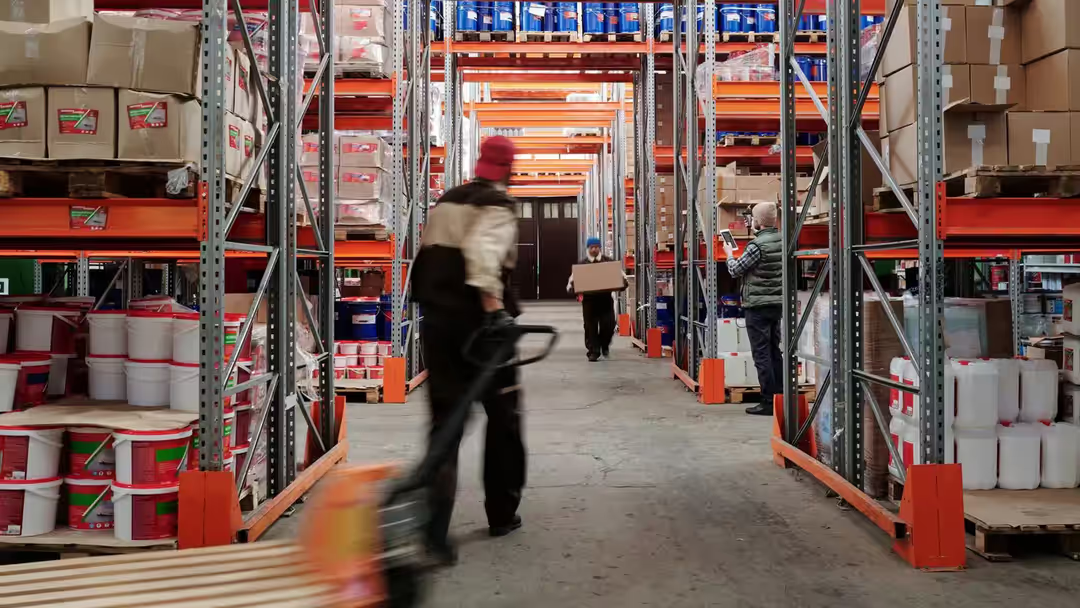
The system is sound but the stock is slotted by habit, so fast-moving lines sit at the far end of the building.
Warehouse optimization that improves an existing operation: slotting, travel distance, picking flow and capacity, using the racking you already have.
Often the cheapest capacity in a warehouse is the capacity that is already installed and simply not being used well. Optimization finds it.
Or call the works directly+91 97692 67792
Systems this work specifies
Heavy Duty Pallet RackingConventional Pallet Racking SystemMedium Duty Shelving RacksWarehouse optimization is the improvement of a storage operation that already exists. It is not a rebuild. It is the work of looking at how the floor is actually used, finding the places where time, capacity and effort are being lost, and fixing them — often by changing very little of the physical structure.
The three questions we start with are simple. How far does your team travel to complete a pick, and how does that compare with the distance the layout implies? Which locations are occupied by stock that is barely moving, while fast-moving lines are stacked on the floor? And how much of the installed capacity is unusable because of how it is slotted or because aisles have grown into storage areas?
The output is normally a mix of physical changes, such as re-slotting or adding levels, and operational changes, such as revised pick sequences and staging discipline. We work on optimization projects across Mumbai, Bhiwandi, Thane, Vasai-Virar, Navi Mumbai and across India, and it is often the most economical project available, because most of the benefit comes from the existing asset.
The system is sound but the stock is slotted by habit, so fast-moving lines sit at the far end of the building.
Aisles have become ad-hoc storage and the positions that are easy to reach are permanently full.
Operators spend most of their time walking rather than picking, which is a staffing cost rather than a storage problem.
Capacity is adequate on an average day and short every month, because the peak has nowhere extra to go.
The business needs more room and cannot take a new site, so the answer has to come from the existing one.
Most of the gain in an optimization project comes from changes that do not involve buying new racking.
The baseline is recorded at the start and the same measures are taken at the end, so the result is a number.
Changes that need no material are separated from those that do, so you can act on the first group immediately.
The analysis uses your pick rates, your velocity and your stock list rather than a general benchmark.
Re-slotting and marking are done on site with the people who run the floor, so the change survives the handover.
We carry out optimization projects in Mumbai, Bhiwandi, Thane, Vasai-Virar, Navi Mumbai, Palghar and across India.
Tell us about your space, your products and how you work today. If drawings exist, send those; if they do not, the site survey comes first and the plan follows it.
We look at the operation as it runs and record what it costs now: travel, waiting, re-handling and unused capacity.
Velocity, pick rates and the problem areas your operators already know about are put on the table together.
The gaps are ranked by what they would return, so effort goes where the benefit is largest.
You get a written set of recommendations, separated into changes that need no material and changes that do.
Re-slotting, re-labelling, marking out and any racking modifications are supported on site.
The same measures are taken again afterwards, so the improvement is a number rather than an impression.
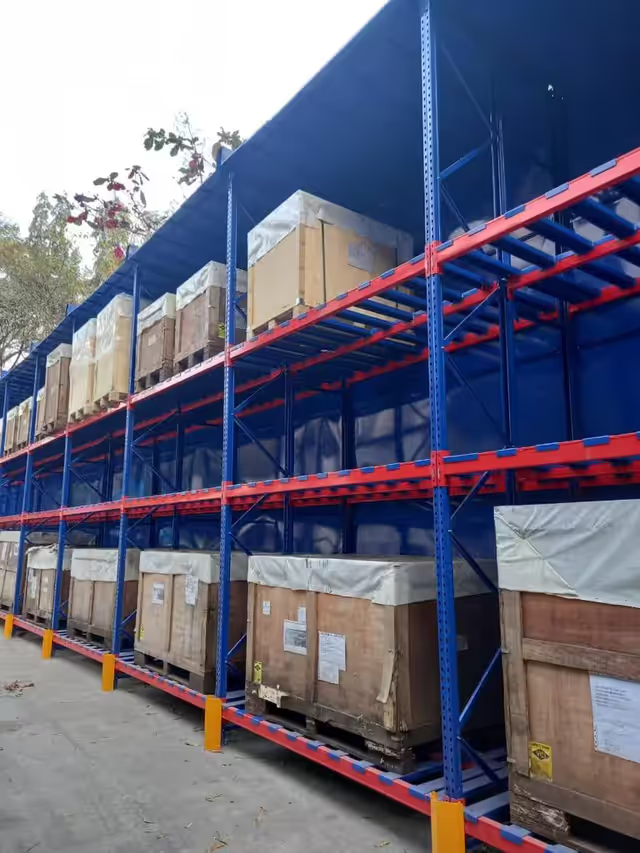
Engineered for high-load industrial warehousing, our heavy-duty pallet racks provide structural stability for unitized pallet loads. Constructed with high-strength upright frames, braced channels, and adjustable box or step beams, these systems integrate seamlessly with standard timber, plastic, and steel pallets.

Conventional pallet racking system for selective pallet storage, allowing direct access to every pallet and efficient use of warehouse space with standard material-handling equipment.
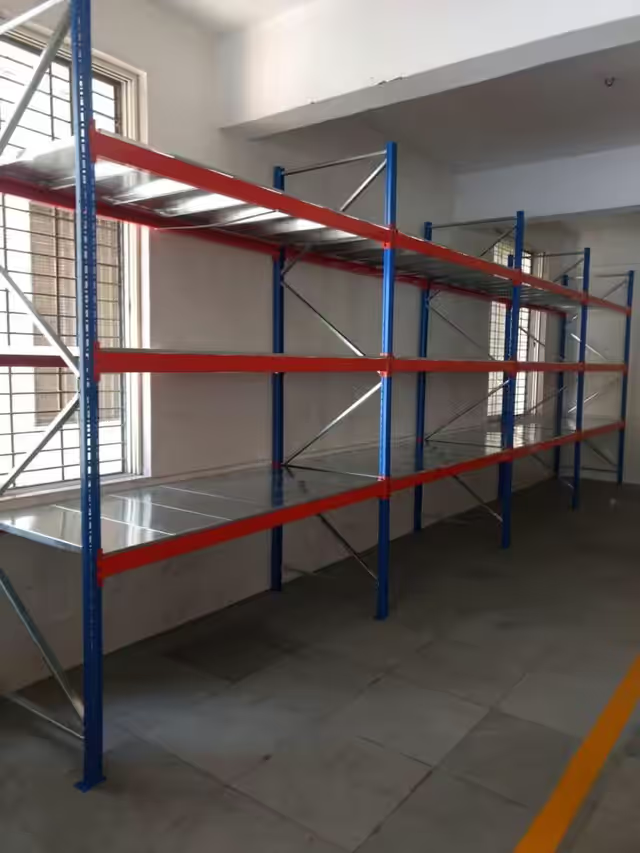
Medium duty shelving racks for organised storage of cartons, spares and consumables, offering higher strength than light office shelving for industrial and commercial use.
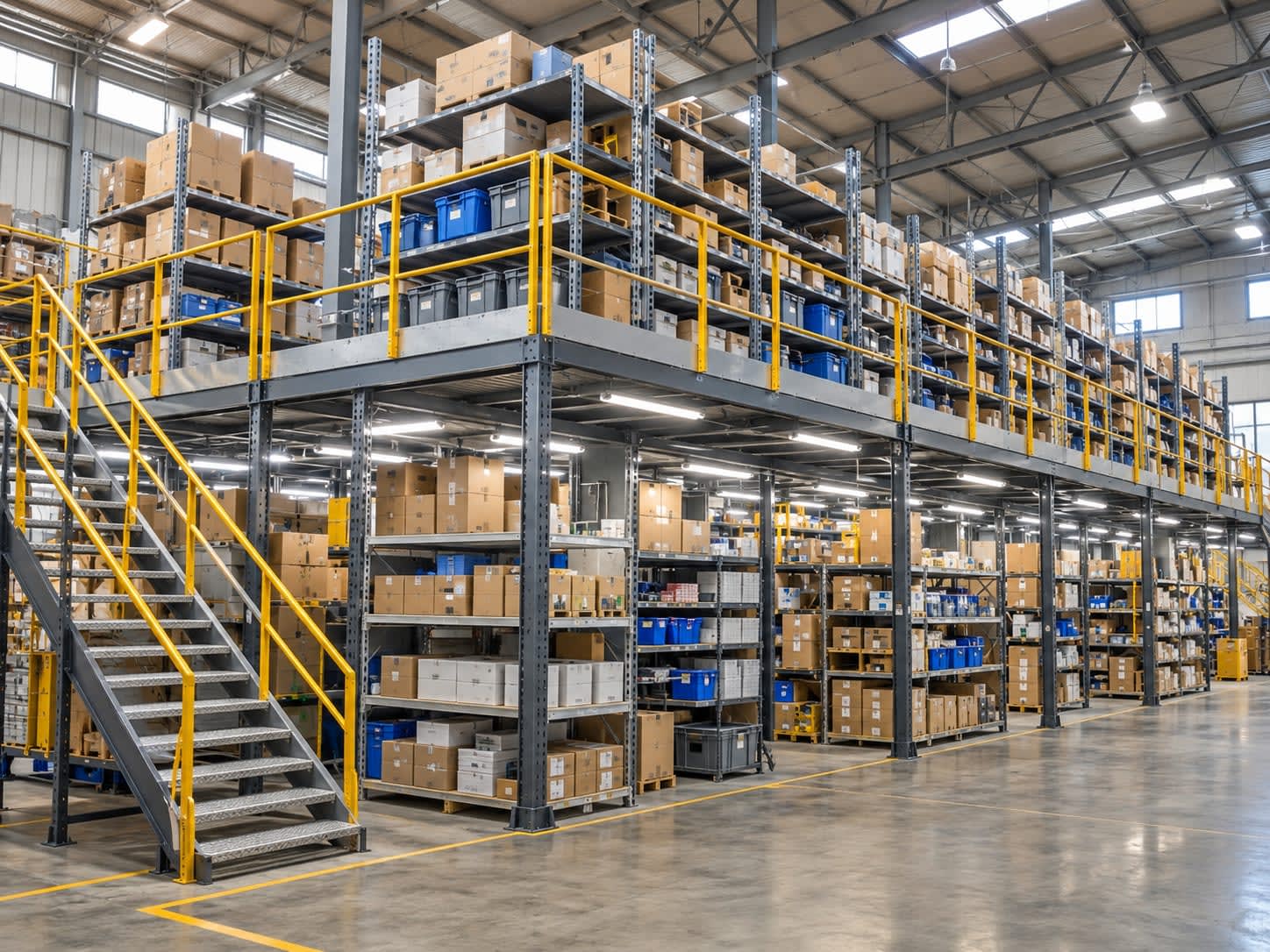
Multiply your vertical picking space without expanding your building footprint. Our multi-tier rack systems utilize rack-supported walkways, staircases, and safety handrails to create multiple manual picking levels within high-ceiling warehouses.

Unlock unused overhead headroom by adding a structural steel intermediate floor. Our free-standing and rack-supported mezzanine rack systems create additional floor area for storage, assembly lines, packing stations, or in-plant offices.
Mumbai & Maharashtra
Other industrial markets
Warehouse optimization is the improvement of a storage operation that already exists. It covers slotting, travel distance, replenishment, pick face availability and the use of installed capacity. It usually involves a mix of operational changes and a smaller number of physical modifications, rather than a rebuild.
Share any dimensions you have, item or pallet sizes, maximum loads, quantities, how often you access them, your handling equipment and any building limits. A site survey can help fill the gaps.
Not usually. In most optimization projects the majority of the gain comes from changes that need no new material, such as re-slotting, re-labelling and correcting the pick sequence. Where the racking itself genuinely limits performance, that is identified with the numbers behind it.
Yes. We review your columns, clear height, doors, services, movement paths and current operations before proposing a layout.
We record a baseline: travel distance and travel time per pick, pick rates, the proportion of the floor in circulation rather than storage, and how much of the installed racking capacity is usable. Those measures are repeated after the changes so the improvement is reported as a number.
Capacity depends on item size, declared loads, system type, aisle space, handling equipment and the usable building area. We calculate it from your specific inputs.
Yes. Installation is included as part of the agreed project scope. We check site readiness before scheduling.
The review is a short piece of work and the recommendations follow quickly. The implementation depends on how much physical change is agreed, and it can be run in phases while the warehouse keeps operating.
Yes. Most of the work is done in phases, in sections of the floor that can be released in turn, with re-slotting carried out area by area.
Yes. Optimization work is particularly common on multi-client sites, where each client has different service levels and stock profiles, and where a single layout rarely suits every contract. The analysis is done per client area rather than across the whole floor.
Yes. We run optimization projects across the Mumbai Metropolitan Region, including Mumbai, Bhiwandi, Thane, Vasai-Virar, Navi Mumbai and Palghar, and for industrial sites elsewhere in Maharashtra and across India.
In most cases it is re-slotting. Fast-moving lines are frequently stored far from where they are picked, while slow-moving stock occupies the most accessible positions. Correcting that ordering alone often produces a measurable reduction in travel before any physical work is carried out.