Deep continuous lanes
Multiple pallets are stored in sequence along a single lane to reduce aisle count.
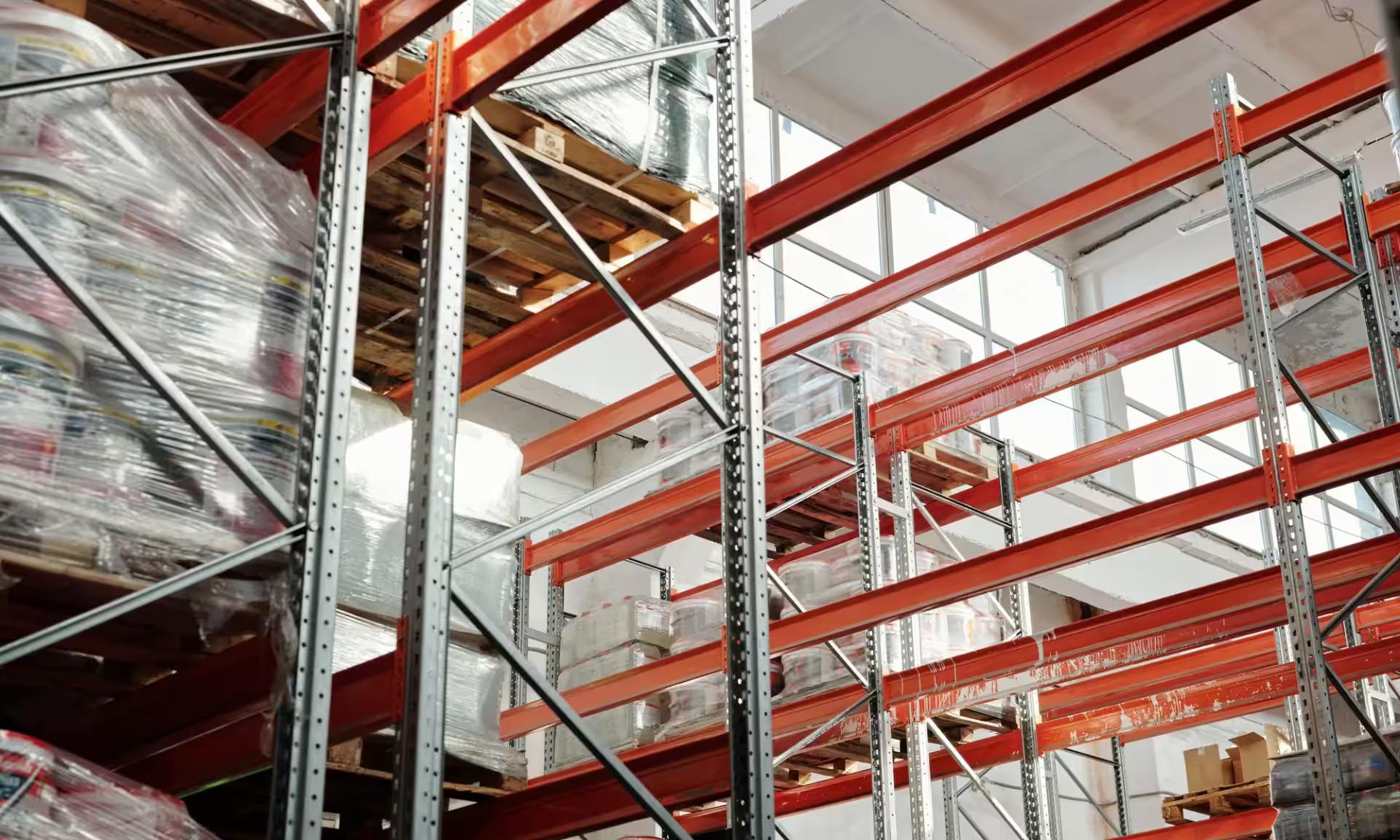
Use deep storage lanes and one-ended forklift access to hold bulk pallet inventory with fewer warehouse aisles.
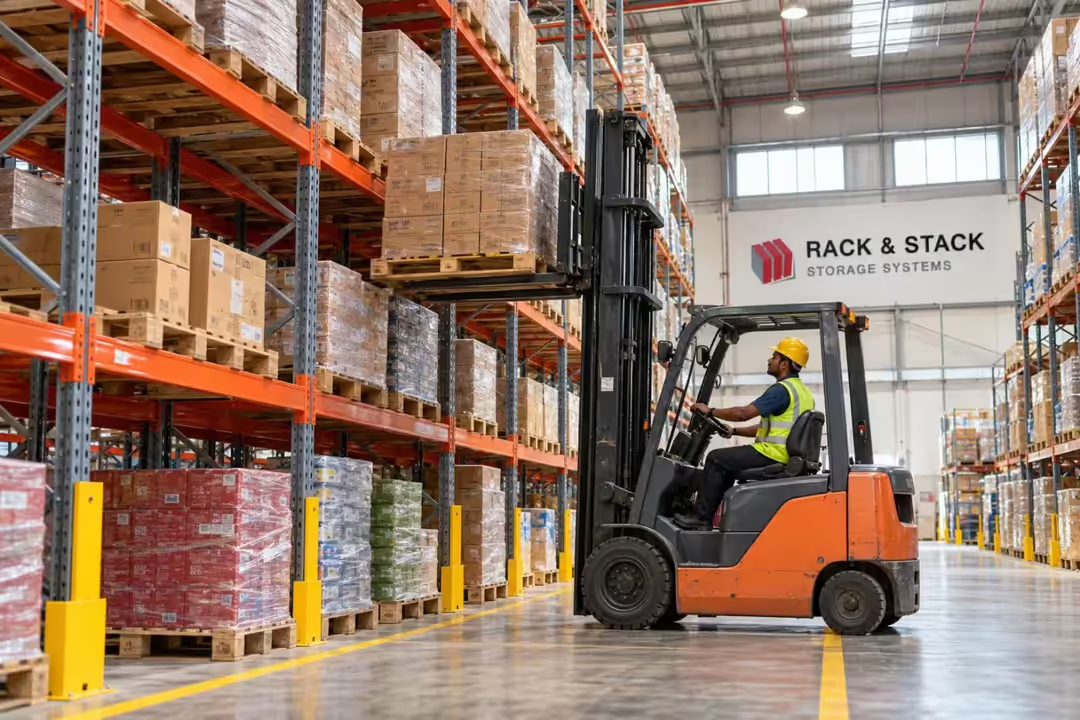
Drive-in pallet racking creates deep storage lanes that a forklift enters to place or collect pallets. With no aisle between every pallet position, the configuration is suited to bulk inventory with low SKU variety and a clear LIFO stock movement.
Need Industrial Pallets or an Elevated Mezzanine Too?
Our heavy duty pallet racking integrates directly with our structural Mezzanine Floors and supports standard Mild Steel Pallets and Wooden Pallets.
Guide values. Final numbers are confirmed in your project proposal.
Rack & Stack
Drive-In Pallet Racking
Industrial Storage Systems
Guide values only. Final specification is confirmed in your project proposal.
Multiple pallets are stored in sequence along a single lane to reduce aisle count.
Pallets are loaded and retrieved from the same aisle end, simplifying the traffic pattern.
Bulk stock occupies more of the available floor area than a fully selective layout.
Suited to inventory where the last pallet placed can be the first one retrieved.
Storage levels can be set to suit loaded pallet heights and operational clearance.
Floor guides, rail stops and impact protection can be included in the approved design.
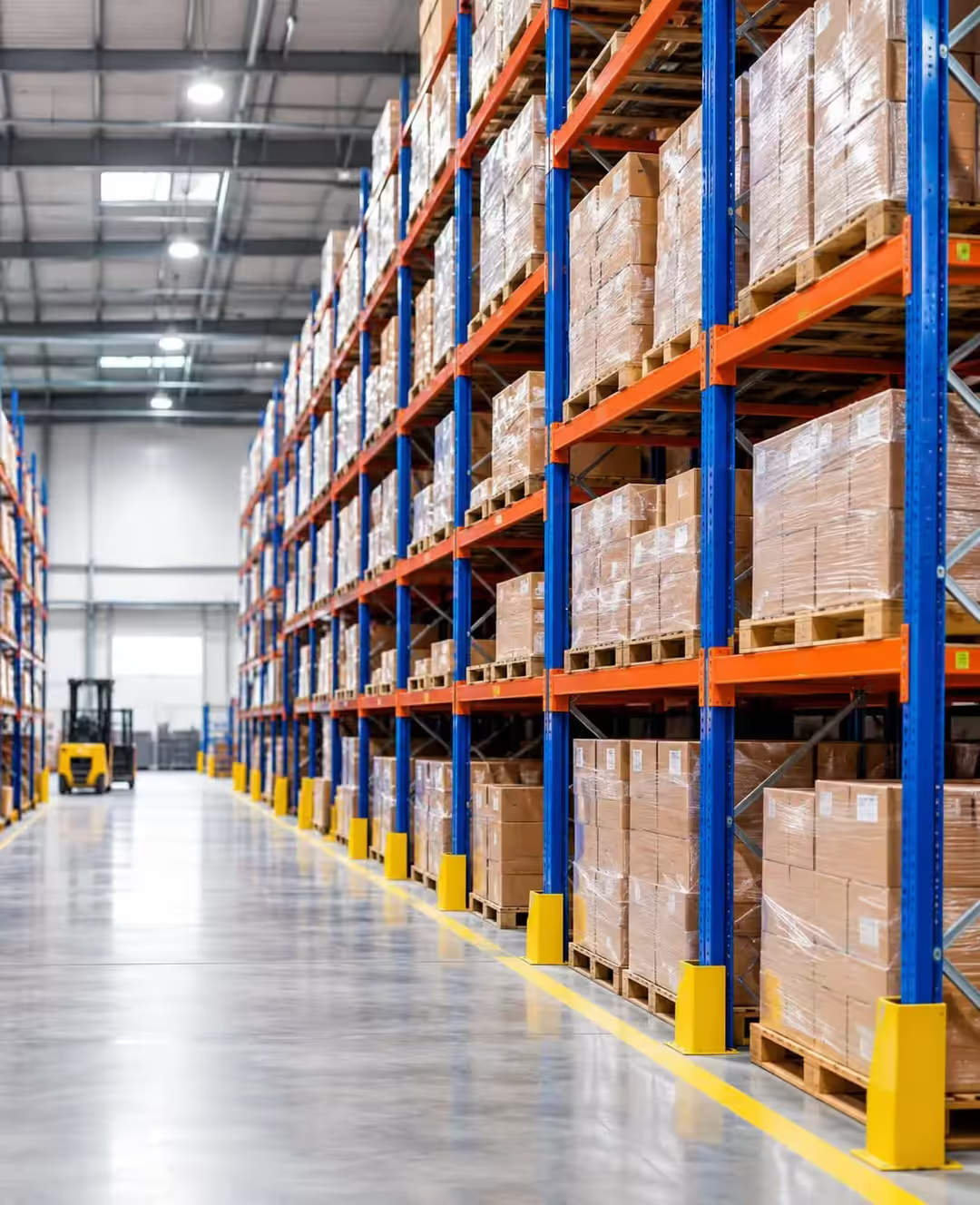

Drive-in pallet racking is a high-density storage system for homogeneous or batch-based pallet inventory. Forklifts drive into a lane to deposit or retrieve pallets on structural rails, so only one access end is needed. This removes the aisle space required by selective racking and makes efficient use of expensive warehouse floor area.
Rack & Stack plans drive-in systems around pallet dimensions, loaded weight, lift height, forklift envelope, lane depth, floor condition and the required stock rotation. Because access is from one end and the system generally operates as LIFO, it is best matched to products that can be stored and retrieved in batches.
Rack & Stack
Drive-In Pallet Racking
Industrial Storage Systems
MUMBAI, MAHARASHTRA · SERVING INDUSTRIAL CORRIDORS ACROSS INDIA
Rack & Stack Storage Systems manufactures, supplies, and installs heavy-duty Drive In Pallet Racking for industrial warehouses, distribution centers, and manufacturing plants across Maharashtra, Gujarat, Delhi NCR, Karnataka, Tamil Nadu, Telangana, Andhra Pradesh, Rajasthan, Madhya Pradesh, Uttar Pradesh, and North India. Custom configurations, local load specifications, and technical installation are confirmed per facility location.
Industrial storage systems built at our Mumbai facility.
Scheduled delivery across all primary freight corridors.
On-site installation and alignment support confirmed per project.
Planned around facility floor layout, load requirements, and regional dispatch timelines across key industrial corridors.
Mumbai, Navi Mumbai, Thane, Vasai–Virar, Palghar, Pune, Nashik, Chhatrapati Sambhajinagar, Nagpur
Ahmedabad, Surat, Vadodara, Rajkot, Bharuch, Vapi, Ankleshwar, Sanand, Gandhidham
Delhi, Gurugram, Faridabad, Noida, Greater Noida, Ghaziabad
Bengaluru, Mysuru, Hubballi, Belagavi
Chennai, Coimbatore, Hosur, Madurai, Tiruppur
Hyderabad, Warangal
Visakhapatnam, Vijayawada, Tirupati
Jaipur, Jodhpur, Udaipur
Indore, Bhopal, Jabalpur
Lucknow, Kanpur, Agra
Ludhiana, Amritsar, Chandigarh
Service and installation availability is confirmed per project proposal. Delivery arranged to eligible manufacturing clusters, industrial estates, and logistics hubs nationwide.
Planning
Confirm pallet dimensions, loaded weight, number of pallets per batch, stock rotation rule, forklift mast and turning dimensions, clear height and floor condition. These inputs determine lane depth, rail levels and protection requirements.
Execution
Frames and rails are erected to the approved drawings, anchored to the floor and checked for alignment and clearance. Load signage and impact protection are verified before the lanes are released for operation.
Discuss a Drive-In LayoutRack & Stack
Drive-In Pallet Racking
Industrial Storage Systems
Drive-in racking removes the aisle between each storage row by allowing the forklift to travel inside the rack lane. Pallets rest on continuous rails at each level, and the operator enters from one end to load or collect stock. The result is a high number of pallet positions in a compact footprint.
The system is best used where inventory arrives in batches and where the stock rotation rule matches LIFO. Rack & Stack reviews lane depth, rail height, pallet overhang, forklift envelope and floor condition before preparing the layout.
Drive-in racking uses one access end and generally follows LIFO. Drive-through racking provides entry and exit at opposite ends, which can support FIFO movement for batch rotation. The right choice depends on how stock enters and leaves the warehouse, the number of SKUs held in each lane and the equipment path.
Rack & Stack can assess both arrangements within the same warehouse plan and recommend a layout based on the operating requirement rather than a generic density claim.
Rack & Stack
Drive-In Pallet Racking
Industrial Storage Systems
Drive-in racking is selected where pallet volume is high, SKU variety is limited and batch movement is controlled.

Store repeated pallets of production inputs in deep lanes close to material handling routes.
Hold large batches of finished pallets before dispatch without adding selective aisles.
Make efficient use of refrigerated floor space with few access aisles.

Keep carton and crate batches together with controlled stock rotation.

Store palletised reels, cartons and packaging stock in bulk lanes.
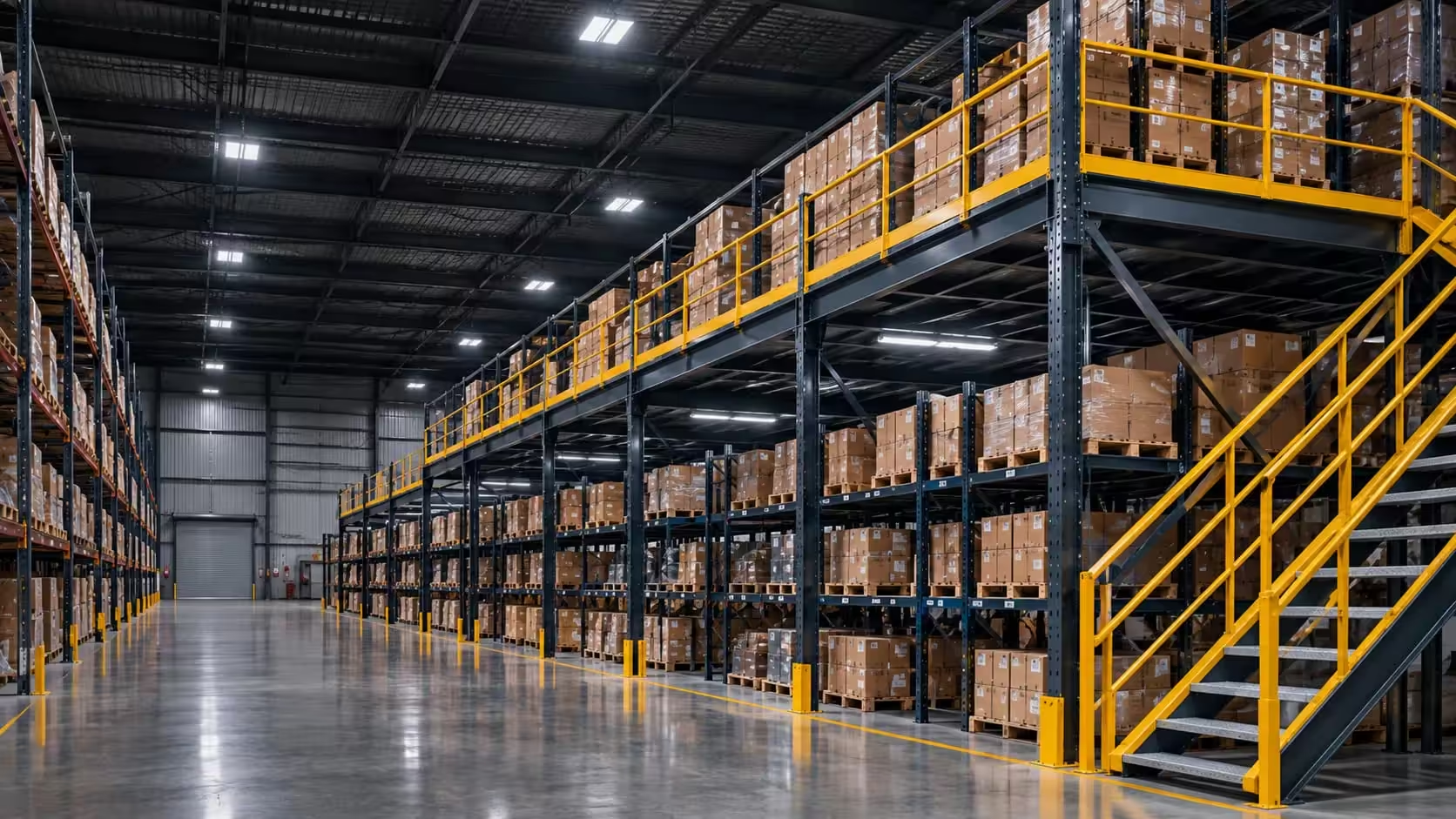
Use deep lanes for clients with large, low-variety pallet inventories.
Trusted by businesses across India
See Our Clients







































Benefits
Real advantages for operators, supervisors and managers.
Deep lanes reduce the number of aisles needed for bulk pallet inventory.
Forklifts work from one aisle end, keeping movement predictable and contained.
Less floor space is committed to vehicle movement and more is available for stock.
Repeated pallets and seasonal stock can be grouped in dedicated lanes.
Rail heights and lane lengths are planned from the actual pallet and equipment profile.
We take your storage system from the first conversation to a finished, handed-over installation.
We discuss your space, item sizes, loads and handling method to understand exactly what you need.
We prepare a bay-by-bay plan that fits your building, stock flow and budget.
Load calculations and drawings confirm sizes, bracing and fixings before we start building.
Parts are made from the approved design with careful bending, welding and finishing.
Our team sets up, aligns and levels the system on site to match the agreed layout.
We check every bay, walk you through the finished installation and hand over the documents.
Timelines are a guide and confirmed in your project proposal.
Recommended systems
Compare drive-through, push-back, shuttle and selective layouts before choosing the access and stock rotation method.

Engineered for high-load industrial warehousing, our heavy-duty pallet racks provide structural stability for unitized pallet loads. Constructed with high-strength upright frames, braced channels, and adjustable box or step beams, these systems integrate seamlessly with standard timber, plastic, and steel pallets.

Conventional pallet racking system for selective pallet storage, allowing direct access to every pallet and efficient use of warehouse space with standard material-handling equipment.
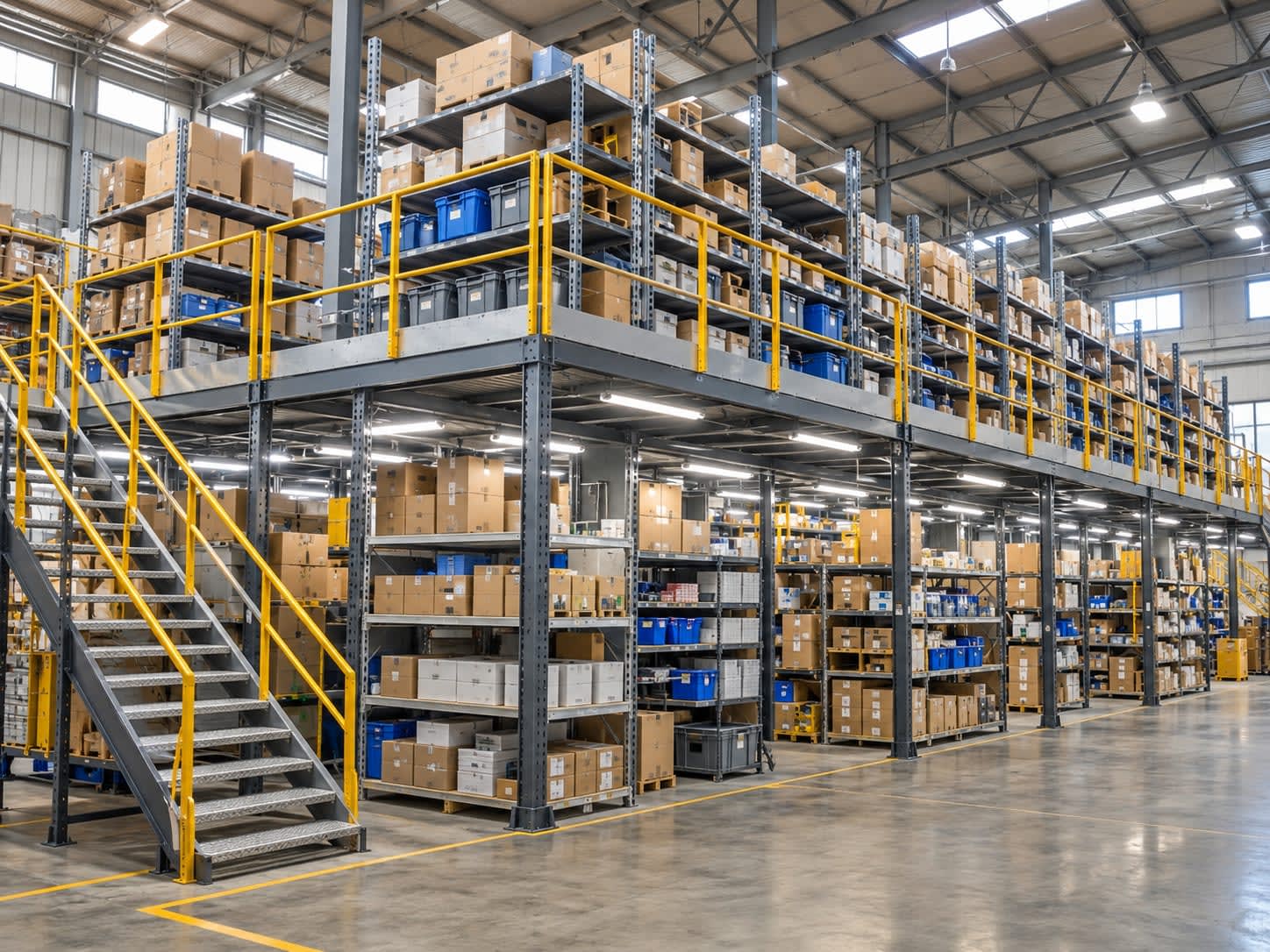
Multiply your vertical picking space without expanding your building footprint. Our multi-tier rack systems utilize rack-supported walkways, staircases, and safety handrails to create multiple manual picking levels within high-ceiling warehouses.

Cantilever racking system for safe, organised storage of long, bulky and irregular items like pipes, sections, panels and timber, with open front access.

Bridging the gap between light-duty slotted angle racks and heavy-duty pallet racking, long span shelving offers wide, unobstructed shelf bays for manually loaded bulky cartons, totes, and medium-weight containers.

Unlock unused overhead headroom by adding a structural steel intermediate floor. Our free-standing and rack-supported mezzanine rack systems create additional floor area for storage, assembly lines, packing stations, or in-plant offices.
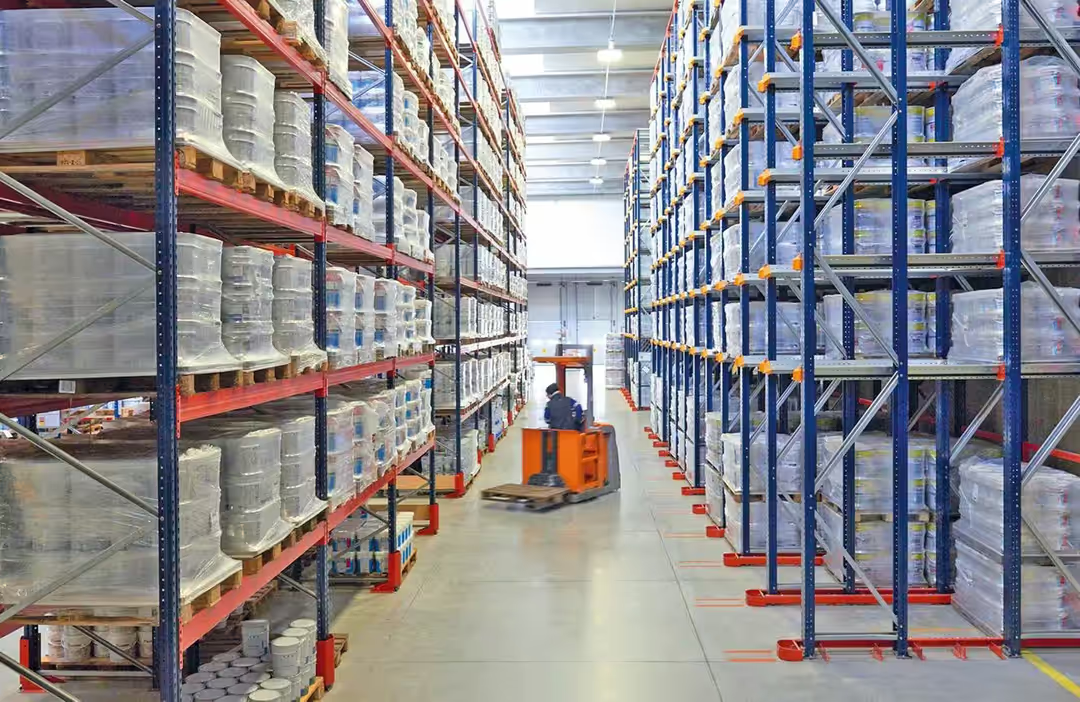
Store two pallets deep with fewer access aisles, planned around batch inventory and reach-truck handling.
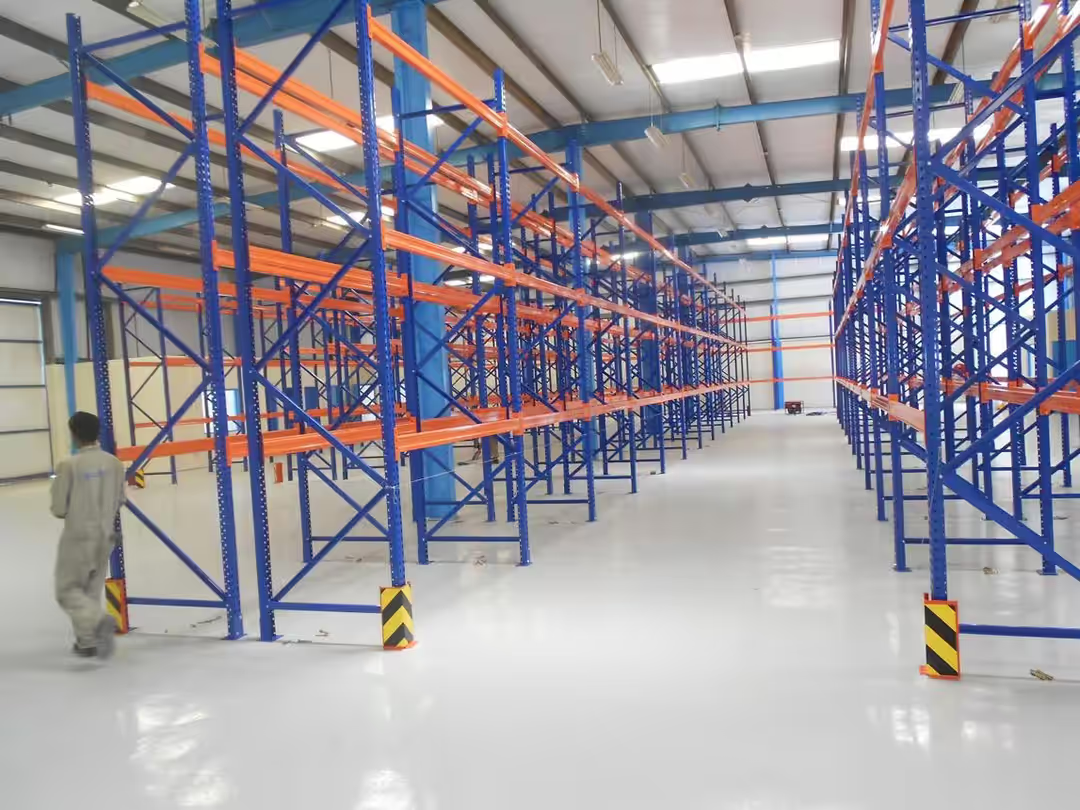
Deep pallet lanes accessible from both ends for structured FIFO batch rotation in high-density warehouses.
Semi-automated deep-lane pallet storage using a powered shuttle cart for repeated high-density movements.
Multi-deep push-back racking using inclined rails and nested carts for compact LIFO pallet storage.
Share your pallet data, batch sizes, forklift details and clear height to discuss a drive-in layout.
Answers
Anything not covered here will be answered in your proposal — or by our team.
Talk to Our TeamDrive-in pallet racking is a high-density storage system where a forklift drives into a lane to place or retrieve pallets. Pallets are supported on rails, and the same lane end is used for entry and exit, so fewer aisles are needed.
Share any dimensions you have, item or pallet sizes, maximum loads, quantities, how often you access them, your handling equipment and any building limits. A site survey can help fill the gaps.
Drive-in racking is generally LIFO because the last pallet placed in a lane is the first one that can be retrieved. If strict FIFO is required, drive-through or pallet flow racking may be more suitable.
Yes. We review your columns, clear height, doors, services, movement paths and current operations before proposing a layout.
It suits homogeneous products, large batches, seasonal reserve stock and pallets that do not require individual access. It is less suitable for warehouses with many unique, fast-moving SKUs.
Capacity depends on item size, declared loads, system type, aisle space, handling equipment and the usable building area. We calculate it from your specific inputs.
Yes. Installation is included as part of the agreed project scope. We check site readiness before scheduling.
It uses standard counterbalance or reach trucks in many cases, but the exact mast height, load centre, turning radius and lane entry envelope must be checked against the equipment that will operate the system.
Common protection includes upright guards, end-of-aisle barriers, floor guides and clearly marked load limits. The final accessories are decided in the layout and engineering review.
Yes. Because it reduces the number of aisles, it is often considered for temperature-controlled warehouses where floor area is expensive. Equipment compatibility and operating clearances still need to be confirmed.
Price depends on lane depth, height, unit loads, structural specification, accessories, quantity and installation scope. A project-specific quote should follow a warehouse assessment.
Share your pallet dimensions, loaded weight, batch quantity, forklift specification, clear height and floor details. Rack & Stack will use those inputs to develop a suitable lane layout.
Share your space, item sizes, maximum loads and handling method if you know them — we'll come back with setup options.